What Contractors Should Know About Ready-Mix Concrete Delivery on Commercial Projects
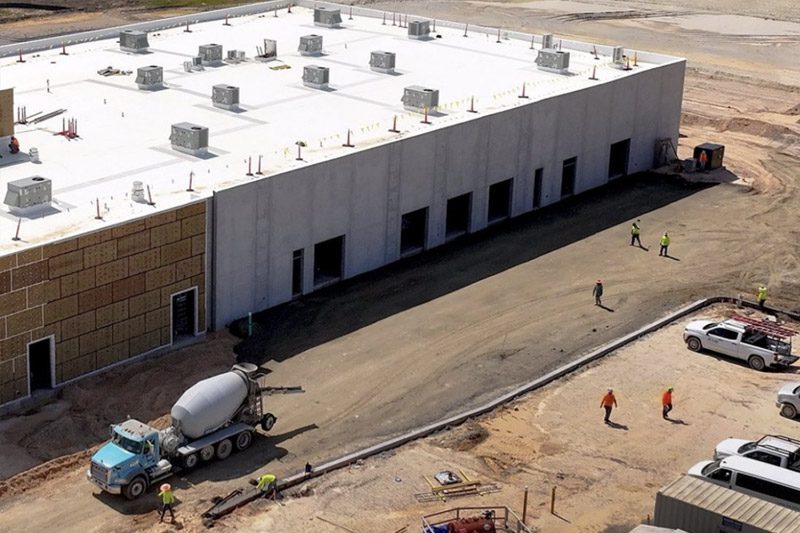
Concrete delivery isn’t just about getting material to the site. On commercial projects, it’s tied directly to placement timing, crew coordination, and how smoothly the pour progresses once it starts.
Below is a practical look at what tends to matter most when working with ready-mix on commercial jobs.
Volume Planning Affects More Than Material Cost
Concrete quantities are straightforward to calculate on paper. Length × width × depth ÷ 27 gives you the number.
What that number doesn’t account for is how the pour actually unfolds.
Subgrade variation, formwork conditions, and placement pace all influence how much concrete is ultimately needed. On larger pours, even small miscalculations can interrupt continuity—either by running short or creating excess that has to be managed on-site.
That’s why volume planning isn’t just about accuracy. It’s about ensuring the pour stays continuous once it begins.
Most commercial jobs account for a margin, but the key is aligning that margin with how the placement is expected to move—not just adding extra material without context.
Mix Specifications Only Matter If They Match the Placement
Slump, PSI, and aggregate size are often treated as standard inputs.
In practice, they’re tied directly to how the concrete will be placed.
A mix designed for pump placement behaves differently than one discharged directly from the truck. Structural elements demand different performance than slabs and timing expectations change how aggressively the mix needs to move or hold.
These decisions influence how the concrete responds under the crew—how it consolidates, finishes, and how predictable it feels across the pour.
Site Access Has a Direct Impact on the Pour
Access issues don’t just slow deliveries—they change how the entire pour is managed.
Ready-mix trucks require space, clearance, and stable ground. When those conditions aren’t fully accounted for, it creates delays that ripple through the placement. Timing compresses. Crews wait or rush. Finishing becomes less predictable.
This shows up more on commercial sites with:
- tight access points
- elevation changes
- staging constraints
Once the pour starts, those constraints don’t go away. They shape how smoothly concrete can move from truck to placement.
Walking the site ahead of time and understanding those limitations is one of the simplest ways to avoid problems that are otherwise difficult to correct mid-pour.
Delivery Timing Is What Keeps a Pour Together
When timing slips—whether from traffic, scheduling gaps, or site delays—the impact shows up quickly. Placement slows. Finishing windows shift and crews start adjusting to stay ahead of the concrete. On larger commercial pours, this becomes even more critical. Multi-truck coordination isn’t just about volume—it’s about maintaining continuity across the entire placement.
That’s where communication between dispatch and the jobsite makes a difference. Not just confirming delivery, but aligning it with how the work is progressing in real time.
Pumping and Placement Method Change the Mix Requirements
Not every job can be handled with direct truck discharge.
Pumps become necessary when distance, elevation, or access limits how concrete can be placed. That introduces another variable—the mix has to be designed to move through the pump without breaking down.
That affects:
- aggregate size
- workability
- how the mix holds together under pressure
These aren’t adjustments you make after the fact. They need to be accounted for before batching, if they aren’t problems usually show up during placement, when options are limited.
Plant Location Matters More Than Most Contractors Expect
On commercial work, especially with higher-strength or more controlled mixes, proximity becomes more important. Shorter travel times help maintain consistency between loads and reduce the likelihood of timing issues during placement.
That’s why access to multiple plants or closer facilities often makes a measurable difference in how predictable a pour feels once it starts. At CSC, our network of over 90 production facilities across the Carolinas allows us to support jobs from multiple directions, reduce haul times, and maintain continuity when conditions or scheduling shift.
Delays Don’t Just Cost Time—They Change the Pour
Once a truck is on-site, the clock is already running. If the crew isn’t ready, or if placement slows, that delay begins to impact workability and timing.
That’s where costs like demurrage come in—but the bigger issue is how the slab is affected. The longer concrete sits, the more the pour shifts away from its intended timing.
Keeping the crew ready, the site prepared, and communication clear before trucks arrive prevents those issues from compounding once placement begins.
Work With a Supplier That Understands Commercial Pours
On commercial work, ready-mix isn’t just a material—it’s part of how the job is executed.
CSC works with contractors across the Carolinas to coordinate delivery, timing, and mix performance based on what the project actually requires.
If you have a commercial pour coming up, give us a call—we’ll help you get it aligned before the first truck arrives.
Sources
- American Concrete Institute
- Portland Cement Association
- Commercial ready-mix delivery practices and FAQs