Ready-Mix vs. Site-Mixed Concrete
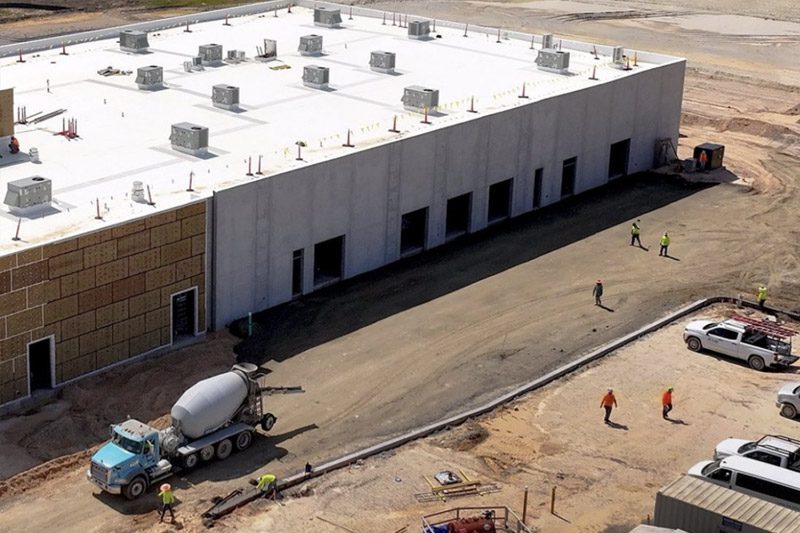
Concrete can be produced two ways on a job: delivered ready-mix from a plant, or mixed directly on-site.
Both methods can meet basic project requirements. The difference shows up in how reliably they perform once the pour starts—and how much control the contractor actually has as the job unfolds.
For most commercial work, that’s what the decision comes down to.
How Ready-Mix and Site-Mixed Concrete Differ
Ready-mix concrete is batched at a plant using controlled proportions of cement, aggregates, water, and admixtures, then delivered to the jobsite.
Site-mixed concrete is produced directly on-site, using raw materials measured and combined in the field.
That distinction affects more than logistics. It determines how repeatable the material is, how predictable the pour becomes, and how much variability is introduced once placement begins.
Concrete doesn’t fail because it was delivered or mixed—it struggles when it behaves inconsistently across the job.
Consistency and Quality Control
With ready-mix, batching happens under controlled conditions, using calibrated systems and consistent materials. Each load is designed to perform the same way as the one before it. That helps crews to establish a flow and stay in it.
On larger placements, that matters more than strength alone. Timing holds together. Finishing stays aligned. The slab behaves as one continuous system instead of a series of separate placements.
Site-mixed concrete depends entirely on field execution. Measurement, sequencing, and environmental exposure all influence the outcome. Even small differences—slight variations in water, aggregate proportion, or mixing time—carry through the slab.
Time, Labor, and Workflow
Ready-mix removes production from the jobsite. Concrete arrives ready to place, which allows the crew to stay focused on placement and finishing. The work moves continuously, without the need to stop and manage batching in the middle of the pour.
That continuity is what keeps jobs predictable.
Site-mixed concrete introduces production back into the workflow and materials have to be staged, measured, mixed, and managed while the pour is happening. That creates natural breaks in the process.
Those breaks don’t just affect time—they affect how the slab comes together. Gaps in placement change timing and timing changes how the concrete finishes. The work becomes less about execution and more about managing interruptions.
Flexibility and Control During the Pour
Sometimes, site-mixed concrete is described as more flexible as adjustments can be made on-site as conditions change. Yes, that flexibility exists—but it comes at a cost.
Every adjustment introduces another variable and once the concrete is placed, those variables don’t disappear.
They show up in how the slab sets, how it finishes, and how consistent it remains across the pour.
Ready-mix shifts those decisions earlier, so instead of adjusting during the pour, the mix is aligned ahead of time based on how the job is expected to run. That reduces the number of decisions being made once placement begins—when timing is least forgiving.
On projects where schedule, finish quality, and coordination matter, fewer variables during the pour usually leads to better outcomes.
Cost Considerations
Material cost alone rarely reflects the true cost of concrete.
Site-mixed concrete can appear less expensive upfront. Raw materials are purchased directly, and delivery costs are avoided.
But the job still carries the cost of labor, equipment, batching time, and variability. When consistency breaks down, it shows up in slower placement, increased finishing effort, and potential rework.
Ready-mix includes production and delivery, which raises the upfront number. At the same time, it removes several sources of variability and reduces the labor required to manage the pour, so in practice, the cost difference is less about price per yard and more about how much risk the job can absorb once the concrete is placed.
Where Each Approach Fits Best
| Ready-Mix Concrete | Site-Mixed Concrete |
| Larger placements where volume and timing must stay aligned | Small-scale work with limited volume |
| Commercial and DOT projects with defined specs and schedules | Remote locations with restricted access for delivery trucks |
| Jobs where consistency across the entire pour is required | Minor repairs or short-duration pours |
In practice, site-mixed concrete tends to serve specific constraints—access, scale, or short-duration work.
Ready-mix has become the standard for most commercial and infrastructure projects because it supports consistency, coordination, and control at a scale that site mixing typically cannot match.
Work With a Supplier That Helps You Plan Ahead
If you’re planning a pour and don’t want the concrete to become the variable you’re managing, bring your supplier into the conversation early.
Not to go over specs—but to talk through what the placement is actually going to demand. That’s where most of the problems you’ve seen on past jobs start.
CSC works with contractors across the Carolinas to sort that out before anything is scheduled. If you want the pour to stay consistent from the first truck through the last, we can walk through it with you.