How to Winterize Your Construction Site in the Carolinas
How to Winterize Your Construction Site in the Carolinas: Practical Guidance for Safe and Productive Concrete Work
Winter in the Carolinas is unpredictable. A morning that starts at 45°F can drop below freezing by afternoon, and wind, shade, and ground temperature often shift faster than the forecast suggests. These changes influence how workers move, how equipment performs, and how concrete behaves from placement through early curing.
Deadlines don’t pause for cold weather, so winter preparation needs to be deliberate. The contractors who stay productive understand how cold affects each phase of concrete construction — not just in theory, but in day-to-day field conditions.
Below is a practical, concrete-focused guide to preparing your site for the winter season.
How Cold Weather Changes the Jobsite
Cold weather affects nearly every aspect of concrete construction. Subgrades retain moisture and stiffen overnight, which influences compaction. Formwork and reinforcing steel pull heat out of fresh concrete, slowing early hydration. Moisture freezes in shaded or low-lying areas, creating uneven footing and inconsistent curing environments around the slab.
These changes don’t occur in isolation — they compound. Each shift in temperature, wind, or surface condition alters how the jobsite performs. Recognizing these changes early helps teams adjust placement timing, finishing approaches, and protection plans before the concrete is placed.
Knowing When Weather Should Pause Work
The decision to pour or pause in winter is rarely based on a single number. Temperature, wind speed, precipitation, and ground conditions collectively determine whether a slab can gain the heat it needs to hydrate properly.
OSHA notes that wind can accelerate heat loss even at temperatures above freezing. The National Weather Service highlights freezing rain and sudden temperature drops as conditions that increase slip hazards and equipment instability. For concrete, these same conditions influence placement rate, finishing windows, and early-age strength development.
Contractors who monitor hourly forecasts and incorporate weather margins into their weekly planning avoid the rushed finishing, cold joints, and curing problems that often arise when a pour runs into a fast-changing weather system. When outdoor work becomes unsafe or unproductive, shifting to layout, staging, interior prep, or inspections keeps the project advancing without risking slab performance.
Keeping Equipment Working Through the Cold
Cold temperatures affect equipment long before they force a shutdown. Hydraulic oil thickens, batteries lose output, and diesel engines require longer warm-up periods. Mixers may spin more slowly at start-up, which can alter slump by the time a load reaches the placement area. Hoses stiffen, controls respond slower, and visibility drops as windows fog or frost.
Reliable winter equipment operation supports concrete performance in several ways:
- Warm-up routines ensure machinery is ready before concrete arrives.
- Cold-weather inspections catch stiff hoses, slow hydraulics, and reduced battery output.
- Anti-gel additives keep diesel equipment functioning during sudden cold snaps.
- Consistent site access prevents delays that compress placement and finishing time.
Winter equipment preparation isn’t just mechanical maintenance — it protects the timing and conditions concrete needs to perform.
Preparing Your Crew for Winter Concrete Work
Equip Workers to Maintain Performance
Concrete work requires dexterity, strength, and consistent pace. Cold weather reduces hand mobility, slows coordination, and increases fatigue. Proper PPE isn’t simply about staying warm — it directly affects the quality of placement and finishing.
Workers benefit from:
- Layered insulation that allows movement
- Waterproof outerwear for cold rain and sleet
- Slip-resistant boots for icy or saturated areas
- Gloves that maintain grip and fine-motor control in low temperatures
When workers lose dexterity or mobility, the slab reflects it — edges, joints, and surfaces are harder to finish consistently.
Reinforce Training and Work Practices
Cold exposure builds throughout the day. Crews need clear expectations for taking warm-up breaks, recognizing early signs of cold stress, and managing hydration. Winter often reduces perceived thirst, but dehydration contributes to fatigue and slower decision-making.
Supervisors should watch for slowed movement, changes in focus, or unsteady footing. These early indicators often appear before a worker recognizes them.
Keep Communication Open
Concrete placement in winter depends on communication. Workers should report icy areas, shifting conditions, or PPE that isn’t performing. These details influence how concrete is placed, consolidated, and protected — and catching them early maintains both safety and quality.
Clearing and Maintaining Safe Work Surfaces
Slip hazards increase in winter, but on a concrete site, they also affect finishing quality, curing, and equipment stability. Ice on walkways, platforms, or around the slab can disrupt placement pacing and cause surface defects when workers lose footing or finishing equipment shifts unexpectedly.
Effective winter surface management includes:
- Clearing snow and ice early and throughout the day
- Applying sand, melt agents, or traction aids in high-traffic areas
- Monitoring shaded areas where ice persists
- Pausing ladder, scaffold, or lift work when surfaces cannot be kept stable
A consistent approach to surface management keeps crews safe and supports uniform slab curing and finishing.
Cold Weather Concreting Requires Expertise
Cold-weather concrete work is one area where technical understanding and preparation make the largest difference.
Low temperatures slow hydration, extend set time, and increase the risk of early-age freezing. Many cold-weather issues are invisible during placement; they appear weeks later as scaling, discoloration, or surface defects.
Our approach is built around mix performance and field conditions. Changes in cement composition —behave differently at lower temperatures. Because of that, each plant evaluates how its cement, aggregate, and admixture combinations perform in winter environments.
From that testing, we calibrate:
- Cement content and blend proportions
- Admixture combinations for predictable set time and strength gain
- Water and aggregate temperatures during batching
These adjustments ensure the concrete leaves the plant within the appropriate temperature range and maintains workable properties throughout placement.
Winter placement also involves timing. Travel distance, expected temperature drop, wind patterns, and slab size all influence how a concrete mix behaves at the jobsite. Our technical, dispatch, and operations teams coordinate closely to match mix performance with real placement conditions.
After concrete is placed, protection becomes critical. Blankets, curing methods, and insulation strategies help the slab retain heat long enough for hydration to progress. A strong winter pour requires both a reliable mix and adequate protection through the first critical hours.
A Successful Winter Strategy Comes Down to Coordination
Cold-weather construction works best when contractors and suppliers plan together. Winter schedules shift, access conditions change, and delivery timing becomes more sensitive to temperature swings.
When contractors bring CSC into planning early, we help identify the adjustments needed to support placement timing, finishing conditions, and curing requirements. Clear communication reduces delays and ensures the concrete’s performance aligns with the conditions crews are working in.
If You’re Preparing for Winter Concrete Work, CSC Can Help
Cold weather doesn’t leave much room for error. If you’re planning concrete work this winter and want mixes, timing, and protection strategies that match real Carolina conditions, our team can help.
We work with contractors every season to prepare the right approach for each project so winter weather doesn’t dictate performance.
If you have any questions, reach out to us. Our team can walk you through the best mix adjustments and site practices for the conditions you’re working in.
Sources National Weather Service. (n.d.). Winter Weather Safety. https://www.weather.gov/safety/winter
OSHA. (n.d.). Winter Weather Hazards and Precautions. https://www.osha.gov/winter-weather
OSHA. (n.d.). Cold Stress Guide. https://www.osha.gov/cold-stress
Portland Cement Association. (n.d.). Placing Concrete in Cold Weather. https://www.cement.org
American Concrete Institute (ACI). (2010). ACI 306R-10: Cold Weather Concreting.
Understanding Concrete Cracks: What They Mean and When They Matter
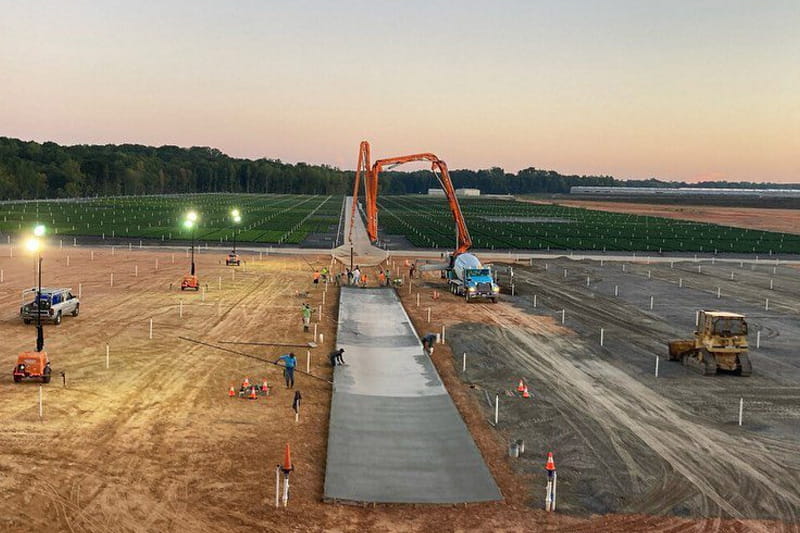
Concrete cracks. That’s not a failure—that’s reality.
Concrete is a rigid material that changes volume as it sets, dries, cools, and responds to its surroundings. Even when a slab is properly designed and placed, some cracking should be expected. What matters is why the crack formed, how it behaves, and whether it affects performance.
The American Concrete Institute makes this clear in ACI 302.1R: crack-free slabs are not a realistic expectation, and cracking alone does not indicate poor design or workmanship.
“Even with the best floor designs and proper construction, it is unrealistic to expect completely crack- and curl-free floors. Consequently, every owner should be advised by both the designer and contractor that it is completely normal to expect some amount of cracking and curling on every project, and that such an occurrence does not necessarily reflect adversely on either the adequacy of the floor’s design or the quality of its construction.”
Understanding cracking means separating normal behavior from problems that require attention.
Cracks That Form Early Don’t Wait for Strength
Some cracks form before the concrete ever has a chance to gain strength.
When concrete is fresh, it contains more water than it ultimately needs for hydration. If surface moisture evaporates faster than bleed water can replace it, the surface begins to shrink while the concrete below is still plastic. That restraint creates stress, and the slab relieves it through cracking.
These cracks often show up near reentrant corners, penetrations, and slab edges—areas where the concrete cannot move freely. They are typically narrow, but they can extend through the slab depth. Once they form, they’re permanent.
Good curing practices, wind protection, and evaporation control reduce the risk, but under aggressive conditions, early-age cracking cannot be eliminated. It can only be managed.
Temperature Movement Cracks Where Restraint Exists
Concrete expands when it warms and contracts as it cools. When that movement is restrained, cracking follows.
Slabs tied into foundations, walls, or adjacent placements rely on joints to absorb movement. When joints are missing, poorly spaced, or bridged, the concrete finds another way to relieve stress—often in long, straight cracks that follow restraint lines.
In the Carolinas, daily and seasonal temperature swings are enough to create this movement, even without extreme cold. When movement has nowhere to go, cracking is a predictable outcome.
Soil Movement Is Often the Real Driver
Concrete performs best when it’s supported uniformly. When that support changes, the slab responds.
In this region, cracking is more commonly driven by soil moisture changes than by freeze–thaw cycles. Heavy rainfall, poor drainage, irrigation, or drought can cause soil to expand or settle beneath a slab. When support becomes uneven, cracks follow.
This is frequently seen near slab edges, control joints, and areas disturbed by utility work. Poor compaction, decomposing organic material, and inconsistent moisture conditions increase the risk.
Once the slab is in service, these movements often continue. The concrete simply reacts to what’s happening below it.
Load Problems Usually Start Below the Slab
Concrete is strong in compression, but it relies on the ground beneath it to stay put.
When loads exceed what the subgrade can support—often after the soil has softened from rain—the slab deflects. Cracks form even when the concrete itself meets strength requirements.
In commercial and light industrial work, this is more often a support issue than a mix issue. Understanding expected loads, access routes, and subgrade conditions is just as important as specifying compressive strength.
Some Cracks Are Surface-Deep
Not every crack affects structural performance.
Crazing appears as fine, shallow cracks that resemble spider webs or shattered glass. It’s caused by rapid surface drying and is primarily cosmetic.
Crusting-related cracking can occur during stamping or texturing when the surface stiffens faster than the concrete below. When pressure is applied, the surface can tear around joints or pattern edges. These cracks affect appearance, not capacity.
They don’t look good—but they don’t usually compromise the slab.
Cracking Can Be Reduced, Not Eliminated
Concrete cracking cannot be prevented entirely. It can only be controlled.
Proper site preparation, jointing, placement timing, curing, and mix selection all reduce risk. None remove it. The goal is predictable cracking, where movement occurs where it’s intended and does not affect performance or durability.
When cracks appear outside planned locations, they usually point to restraint, support, or timing—not a single isolated mistake.
Most Outcomes Are Decided Before Placement
By the time concrete is on the ground, options are limited.
Cracking behavior is largely determined by decisions made earlier—how the slab is detailed, how the subgrade is prepared, how the concrete is placed, and how it’s protected during early hydration. When those elements are aligned, cracking is easier to anticipate and manage.
When they aren’t, cracks tend to surprise people later.
Managing Cracking Starts With Coordination
Cracking becomes a problem when expectations don’t match reality.
CSC works with contractors across the Carolinas to align mix design, placement conditions, and jobsite constraints before concrete is placed. That coordination helps ensure cracking behavior is understood—not guessed at—and that responsibility is shared where it belongs.
If you’re seeing cracking on an existing slab or planning an upcoming placement, your local CSC team can help evaluate conditions and align expectations before the first truck arrives.
Sources
- American Concrete Institute (ACI). ACI 302.1R – Guide for Concrete Floor and Slab Construction
- Portland Cement Association. Concrete Cracking
What to Look for When Choosing a Ready-Mix Concrete Supplier
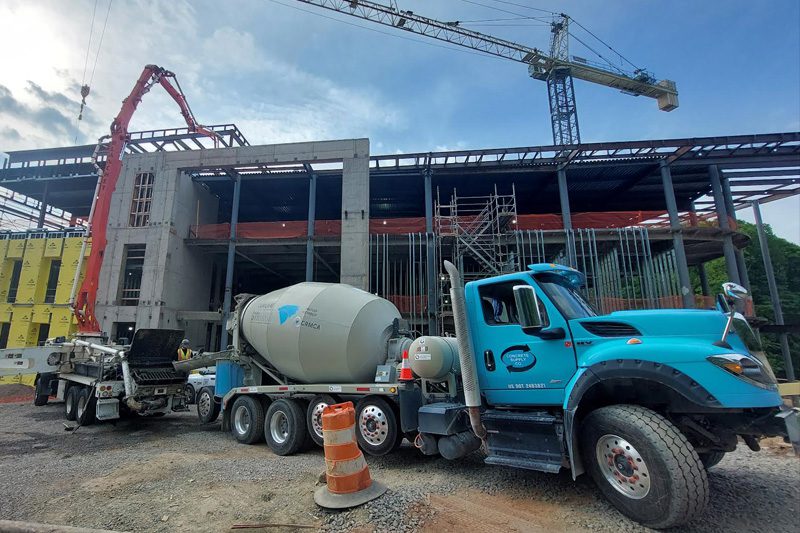
Concrete does not give you many chances. Once it’s placed, the outcome is locked in. Finishing, curing, durability, and long-term performance all trace back to what happened in the first few hours on the jobsite.
Most concrete problems aren’t caused by missed deliveries. They happen when the concrete doesn’t behave the way the job needs it to behave—and by the time that becomes clear, options are limited.
That’s why choosing a ready-mix supplier is less about procurement and more about execution.
Start With How the Job Will Actually Run
Every project looks straightforward on paper. The field is different.
Access tightens. Crews get stretched. Placement windows shrink. Finishing pressure builds. Those realities shape how concrete needs to behave far more than what’s written on the ticket.
A capable supplier wants to understand how the pour will unfold before it starts—where the job slows down, how quickly concrete needs to move, and what happens if something slips. Those details influence sequencing, delivery timing, and mix behavior.
When they’re overlooked, the concrete ends up driving the job instead of supporting it.
Experience Only Matters When Something Changes
Experience doesn’t show up when everything goes according to plan. It shows up when it doesn’t.
An experienced supplier recognizes early when a pour is drifting—when finishing windows tighten, when bleed water stops cooperating, or when placement pace starts working against the slab. They know which adjustments help and which ones create problems that won’t show up until later. That judgment happens during the pour. Not after it.
Consistency Is What Keeps a Pour From Unraveling
Crews work off rhythm. When that rhythm breaks, problems follow.
Inconsistent loads force finishers to adjust constantly. Timing changes. Pressure changes. Surface quality suffers. None of that improves as the day goes on.
A dependable supplier controls materials and batching closely so the concrete behaves the same from the first truck to the last. When changes are necessary, they’re intentional and communicated early—before crews have to compensate in the field.
Strength Numbers Don’t Tell the Whole Story
Set time, workability, finishing response, and early strength development all influence whether a slab comes together cleanly or turns into a fight. Those characteristics are shaped by cement chemistry, admixture interaction, and material temperatures—not just mix design on paper.
A technically capable supplier understands those relationships. They know when the mix needs to change and when the issue is execution, not materials. That distinction matters most on large placements, tight schedules, and jobs with little margin for recovery.
Timing Is the Hidden Variable
Small delays compress finishing windows quickly. A late truck, a slow turnaround, or a missed communication can turn a controlled placement into a rushed one.
Reliable suppliers stay engaged once trucks are rolling. Dispatch stays aligned with the field. Changes get communicated early. Adjustments happen before problems stack up.
Good coordination doesn’t eliminate challenges. It keeps them from compounding.
Price Only Makes Sense When Risk Is Accounted For
The lowest number rarely reflects the cost of slowed placements, finishing issues, surface repairs, or durability problems that appear later. Concrete failures are permanent, and fixing them is expensive.
A fair price reflects consistency, technical judgment, and coordination—the things that protect the work once the concrete is down. When those elements are missing, the cost usually shows up elsewhere: in added labor, disrupted schedules, callbacks, or reduced service life. In concrete work, risk that isn’t priced up front almost always gets paid later.
Supplier Choice Shapes the Day
The ready-mix supplier influences how the day goes. The right one supports steady placement, predictable finishing, and fewer surprises. The wrong one introduces uncertainty at the most unforgiving stage of the work.
Choosing based on execution capability—not just availability or price—leads to better outcomes.
Most Problems Are Prevented Before the First Truck Arrives
Concrete performance is largely decided before placement begins. When contractors and suppliers align early on how the job will actually run, concrete behaves more predictably and issues are easier to manage.
CSC works with contractors across the Carolinas to understand how each project will be built—not just what’s specified. That early alignment reduces risk once placement begins.
If You’re Evaluating a Ready-Mix Supplier, CSC Can Help
For more than 65 years, CSC has supplied ready-mix concrete for commercial, residential, and DOT projects across the Carolinas. Our focus is consistency, coordination, and performance—because those are the factors that matter once the concrete is placed.
If you’re evaluating suppliers for an upcoming project, reach out to your local CSC plant. We can help align mix design and delivery with how the work will actually be executed.
Concrete vs. Wood: What Builders Gain by Choosing Concrete

Material Matters: Why the Right Choice Impacts More Than Cost
When choosing structural materials for a commercial project, cost is only part of the equation. Lifespan, maintenance, risk exposure, and sustainability all influence long-term performance.
Concrete and wood are two of the most common building materials, but they perform very differently once in service. Concrete provides rigidity, load distribution, and fire resistance. Wood offers flexibility and lower upfront costs — but often at the expense of durability and predictability.
Here’s how the two stack up on the factors that matter most to commercial builders and developers.
Upfront vs. Lifecycle Costs
Wood is often chosen because it’s cheaper to frame and faster to build. But those savings are tied to the first phase only. Over time, repairs, replacements, and insurance premiums erode that early advantage.
Concrete usually requires a higher upfront investment, but it delivers stability over decades. A 2024 NRMCA report found that concrete structures can reduce builder’s risk insurance by 22–72% and commercial property insurance by 14–65%, thanks to fire resistance and durability. When you account for fewer repair cycles, concrete often proves more cost-stable over a 30–50 year service life.
Maintenance & Repair Requirements
Wood is vulnerable to moisture, pests, and warping. Keeping a wood-framed building in service means sealing, painting, and replacing exposed components.
Concrete resists those same stressors. With proper design and finishing, long-term maintenance is usually limited to surface inspections, joint treatments, or resealing — not structural replacement. That translates into lower operating costs and fewer service disruptions.
For commercial facility managers, this difference can mean the gap between routine maintenance budgets and unexpected capital expenses.
Structural Integrity and Lifespan
A wood structure may serve reliably for 20–30 years before significant interventions are required. For light commercial or temporary use, that’s acceptable. But it’s less attractive for facilities designed to provide value over several generations.
Concrete buildings, by contrast, routinely last 60–100 years with proper care. Reinforced systems give concrete the capacity to resist lateral forces, heavy loads, and fire without the deformation common in wood. That’s why mission-critical facilities — hospitals, schools, industrial plants — often default to concrete.
Fire, Mold, and Moisture Resistance
Risk management is where the gap between wood and concrete widens. Wood, even when treated, remains a combustible material. Insurers recognize this and price accordingly.
Concrete, on the other hand, is inherently fire resistant and noncombustible. It also resists mold and water damage when properly cured. These traits reduce liability, simplify permitting, and build tenant confidence. They’re also a key reason why insurance providers favor concrete with lower premiums.
Sustainability and Waste Reduction
Concrete is the most recycled construction material by volume in North America. According to the Construction & Demolition Recycling Association, more than 82% of demolished concrete is reused — often as base material for roads or new construction.
Concrete also contributes to thermal mass, which helps stabilize indoor temperatures and reduce HVAC loads. Wood retains heat differently, degrades faster, and creates more landfill volume over its lifecycle.
Both materials can be sourced responsibly, but concrete’s longevity, recyclability, and energy performance give it a long-term environmental edge.
Customization and Aesthetic Control
Wood has long been valued for its versatility — it’s easy to cut, stain, and shape. But concrete technology has caught up.
Architectural concrete can be cast into custom forms, polished, pigmented, or textured to resemble wood, stone, or other finishes. Builders can now achieve architectural freedom without trading away performance.
The Bottom Line for Commercial Construction
If the goal is to reduce long-term risk, stabilize operating costs, and extend facility lifespan, concrete is the stronger choice. It’s not just about structure — it’s about predictability, performance, and ROI over decades.
At Concrete Supply Co., we’ve seen how the right mix design can shift a project from short-term savings to long-term success. With regionally tested mixes, technical expertise, and reliable delivery, we help builders deliver facilities that last.
Sources
- National Ready Mixed Concrete Association (NRMCA): nrmca.org
- Construction & Demolition Recycling Association (CDRA): cdrecycling.org
- Green Building Canada: greenbuildingcanada.ca
- Giatec Scientific – Wood vs. Concrete: What’s the Best Choice?: giatecscientific.com
6 Tips for Better Communication with Your Suppliers

In construction, communication isn’t a side task — it’s the framework that holds a project together. Poor communication leads to delays, cost overruns, and safety risks. Clear, consistent communication keeps jobs on track.
Here are six practical steps, based on decades of industry experience, to make communication with your suppliers more effective.
1. Speak Clearly — No Assumptions
Clarity prevents mistakes downstream. If you call in “an early pour,” one crew may think 6:30 am while another assumes 8:00 am. Be precise: “Trucks on site at 7:00 am, discharge complete by 10:00 am.”
What to do:
- Use spec sheets or submittal numbers instead of shorthand like “regular footing mix.”
- Provide sequencing instructions if multiple placements are planned.
- Put site access directions in writing — don’t leave it to interpretation.
The Construction Industry Institute has shown that unclear communication is one of the leading causes of rework — and rework is one of the fastest ways to lose margin.
2. Always Name a Contact — And a Backup
On a busy project, nothing wastes time like everyone wondering who can make the call. Start with a contact sheet that lists:
- Primary contact with decision-making authority.
- Backup contact who can act immediately if the primary is unavailable.
- Supplier numbers for dispatch, accounting, and plant managers for off-hours.
When decisions stall, schedules unravel. Even a two-hour delay in concrete delivery can throw off inspections, pumps, and downstream trades. A backup with authority prevents those ripple effects.
3. Set the Ground Rules Early
This step isn’t about formality — it’s about predictability. Decide together, before the first load is batched:
- How often updates will be shared.
- Which channels to use — text for quick field changes, email for approvals, software for logs.
- Standard contact hours and after-hours protocol.
- Minimum notice for cancellations or reschedules.
Think of these as “rules of engagement.” Without them, each side defaults to assumptions, and that’s when deliveries get missed and schedules slip.
4. Share Site Challenges Up Front
Suppliers can only plan around what they know. Provide access codes, staging diagrams, restrictions (such as HOA rules or municipal ordinances), and physical limitations (low wires, tight turns, or narrow entrances).
One missed detail can halt deliveries for the day. Trucks can’t sit at the gate while someone scrambles for clearance, and crews can’t pour if equipment can’t access the site. Sharing challenges up front saves wasted time and material.
5. If It Isn’t Written Down, It Didn’t Happen
Verbal agreements disappear under pressure. Make documentation part of your process:
- After every call, send a quick email confirming mix, yardage, time, and who approved it.
- Track schedule or mix changes in a shared log or platform.
- Keep approvals stored where both teams can access them.
This isn’t busywork — it’s protection. Arcadis reports that disputes in North America average over $42 million and last more than a year, with poor documentation consistently listed as a root cause. A two-line email is far cheaper than a drawn-out dispute.
6. Make Feedback Part of the Process
Communication doesn’t stop when the concrete cures. If something caused a delay, call it out so it doesn’t happen again. If something went right, acknowledge it. Respect builds stronger relationships. According to the Lean Construction Institute , structured feedback loops improve project performance. More importantly, they build trust — and trust is what keeps multiple projects running smoothly over time.
How to do it:
- Provide field feedback during or immediately after the pour.
- Use project closeouts to review what worked and what didn’t.
- Treat feedback as part of the cycle, not an afterthought.
Bonus Tip: Communicate Before There’s a Problem
Most avoidable issues come down to silence. A 60-second check-in the day before can prevent hours of downtime. Don’t wait until trucks are staged to raise a question. Call ahead, confirm expectations, and keep the pour moving.
The Bottom Line
Communication is the cheapest form of risk management you have. Clear instructions, defined contacts, written records, and steady feedback prevent most of the problems that drain time and budget.
At Concrete Supply Co., we treat communication as part of the product we deliver. Our dispatchers, drivers, plant managers, and account reps are trained to keep you informed so you can keep your job on track.
Looking for a supplier that communicates as well as it delivers? Let’s talk.
Sources and Further Reading
- Concrete Supply Co. – Performance-Based Sustainability
- AGC – Best Practices in Construction Communication
- Construction Executive – Communication Tips for Project Success
- Arcadis – 2023 Annual Construction Disputes Report North America
- Lean Construction Institute – Research on Project Performance and Feedback
Strengthening Our Sales Team for Continued Growth

With growth comes change, and as a result of our growth over the past few years, we find it necessary to change our organizational structure to better serve the needs of our customers and employees.
We are pleased to announce that effective June 30, 2025, Reid Harris will be promoted to the position of NC Sales Manager of Concrete Supply Co. Reid joined Concrete Supply in 2008 as a sales representative. He was promoted to Charlotte Commercial Sales Manager in 2018 and was promoted to Charlotte Metro Area Sales Manager in 2020. Reid has been an integral part of our key customer initiatives and sales efforts in the Charlotte Metro area and has demonstrated excellent leadership skills. In his new assignment, Reid will be responsible for sales and market growth within the major NC markets.
Adam Harris currently serving as Sr Account Manager will be promoted to Charlotte Area Sales Manager. In his new assignment, Adam will coordinate and assist in the sales effort for all commercial, residential, industrial and NCDOT work in the Charlotte area. Adam joined Concrete Supply in 2015 as a sales representative and has been a major contributor to our continued success in the greater Charlotte area and throughout the Carolinas.
Damian Difilippo currently serving as Sr Account Manager will promoted to Charlotte Area Sales Manager. In his new assignment, Damian will coordinate and assist in the sales effort for all commercial, residential, multi-family, and NCDOT work in the Charlotte area. Damian joined Concrete Supply in 2013 as a sales representative and has over 27 total years in the ready-mix industry.
Adam and Damian both have consistently demonstrated strategic sales leadership. Their work over the past few years has been instrumental in the execution of our sales goals. In their new role, Damian and Adam will jointly oversee the sales effort in the ten county Charlotte Metro area.
Please join us in congratulating Reid, Adam, and Damian on their well-earned achievements!
The Advantages of Investing in a Concrete Pool

Building a Pool in the Carolinas? Here’s Why Concrete Wins
If you’re thinking about adding a pool to your backyard, you’re not alone—especially here in the Carolinas, where a hot, humid summer day practically demands a cool backyard escape. And yes, as the Carolinas’ premier ready-mix concrete producer, we’re biased—we’ve seen how well concrete pools perform over the long haul.
A pool isn’t just about fun in the sun—it’s an investment in property value and long-term livability. That’s why the material and how your pool is constructed matter. If you focus only on the cheapest upfront option, you may end up paying more in the long run. You’ve probably heard the phrase, “buy once, cry once”—and it applies here. Initial cost is just one factor; how that pool holds up through seasons, storms, and years of use can make all the difference.
With deep regional experience, we’ve watched and helped Carolina homeowners reimagine their outdoor spaces to meet both climate demands and personal design goals. And in those conversations, concrete continues to rise to the top as a durable, high-performing solution.
Comparing Pool Types: Concrete vs. Fiberglass vs. Vinyl Liner
Let’s start with the basics. The three most common pool types are concrete, fiberglass, and vinyl liner. Each offers pros and cons depending on your goals.
Fiberglass Pools: Low Maintenance, Limited Options
Fiberglass pools are factory-molded and shipped in one piece, which makes them quick and easy to install. Their gelcoat surface feels smooth, resists algae growth, and requires less chemical adjustment and cleaning than concrete or vinyl.
But they come in pre-set shapes, sizes, and depths. If you’re dreaming of a custom layout or need something deeper than six feet, fiberglass may not meet your needs. At an average cost of $60,000 for a 12×24 model, you’re paying a premium for convenience—but sacrificing flexibility. According to HomeAdvisor, fiberglass pools typically range from $55,000 to $65,000.
Pros: Low maintenance, fast installation, modern appearance
Cons: Limited size and shape options, higher cost with fewer customization possibilities
Vinyl Liner Pools: Affordable But Less Durable
Vinyl liner pools generally have the lowest upfront cost, starting around $40,000. According to Forbes Home, they usually range from $35,000 to $65,000 depending on size and features.
They’re easy to install and flexible in layout. But they’re also the most fragile. Liners can tear from pets, debris, or general wear—and typically need replacing every 5–9 years. That adds up in long-term costs, and vinyl pools generally offer the least resale value.
Pros: Lower initial cost, customizable layout
Cons: Ongoing liner maintenance, lower long-term value
Why Concrete Pools Offer the Best Long-Term Value
Concrete pools offer full customization and long-term durability. They’ve long been the choice for homeowners who want something permanent, personal, and high-end. And it’s why we believe—especially here in the Carolinas—that concrete is often the best option for a pool that’s built to last.
Total Customization
Concrete can be poured into virtually any shape, size, or depth. Want a lap lane, tanning ledge, vanishing edge, or swim-up bar? Concrete gives you the freedom to design what fits your space and vision.
Built to Last
Unlike liners or prefabricated shells, concrete structures are truly long-lasting. With proper care, a concrete pool can last 50 years or more. Occasional resurfacing may be needed, but that’s a small trade-off for decades of reliable performance.
Designed for Safety
The textured surface of concrete provides better traction and slip resistance than smooth fiberglass—important if you have kids or elderly guests. While it can be a bit rough on bare feet, many homeowners appreciate the added grip.
Real Return on Investment
Concrete pools often add more resale value than other pool types. According to real-estate experts, a standard 14×28-foot inground concrete pool can increase a home’s value by 5–8%, especially in warm regions like the Carolinas.
Pros: Fully customizable, built to last, adds long-term value, safer surface
Cons: Higher upfront cost, longer installation time, occasional resurfacing required
Why Mix Quality Matters in a Concrete Pool
Most homeowners don’t spend much time thinking about the concrete mix behind their pool—and that’s perfectly normal. In most residential builds, contractors use a method called shotcrete or gunite, where concrete is sprayed into place using specialized equipment.
Still, the quality of that material is critical. At Concrete Supply Co., we specialize in ready-mix concrete. Our mixes are tailored to perform in Carolina conditions—resisting cracks, supporting smooth finishes, and holding up through years of sun, rain, and seasonal shifts.
You don’t need to understand the mix itself—but your builder should be working with a supplier who does. Choosing the right materials and the right partner ensures your pool performs beautifully for decades.
Partner With the Experts at Concrete Supply Co.
If you need high-quality concrete for your pool project, we’re here to help. Our team can supply the right ready-mix solution for your design and site conditions—and recommend local builders who know how to bring it to life.
Sources
- Concrete Network. (n.d.). Concrete pool construction guide. Retrieved June 12, 2025, from https://www.concretenetwork.com/concrete/pool_construction/
- Giatec Scientific. (2023, April 4). Concrete vs. fiberglass pools: Pros and cons. Retrieved from https://www.giatecscientific.com/education/concrete-vs-fiberglass-pools-pros-cons/
- HGTV. (n.d.). Does a pool add value to your home?. Retrieved June 12, 2025, from https://www.hgtv.com/outdoors/outdoor-spaces/swimming-pools/does-a-pool-add-value-to-your-home
- National Association of Realtors. (2023). 2023 remodeling impact report: Outdoor features. Retrieved from https://www.nar.realtor/research-and-statistics/research-reports/2023-remodeling-impact-report-outdoor-features
Concrete vs. Asphalt: What’s Better for Roads, Parking Lots, and Driveways?

Pavement decisions aren’t just surface-level—they affect long-term budgets, maintenance schedules, and how well your project holds up to real-world conditions. Whether you’re building a road, parking lot, or distribution hub, the choice between concrete and asphalt carries long-term implications for performance, cost, and sustainability.
Historically, asphalt has dominated the paving landscape due to its low upfront cost and speed of installation. But that default is shifting. Developers, municipalities, and commercial property owners are reevaluating the materials they rely on—and for good reason.
Choosing the Right Material for Long-Term Performance
In commercial paving, the right material doesn’t just meet a spec—it protects your investment. Asphalt is a petroleum-based material known for quick installation and short-term flexibility. But in high-traffic, high-temperature environments, that flexibility can lead to rutting, cracking, and deformation.
Concrete, on the other hand, takes a rigid approach that distributes heavy loads more evenly, resists thermal extremes, and holds its shape over time. That durability is one of the many reasons CSC’s engineered mixes are trusted across the Carolinas for applications that simply can’t afford to fail.
Cost vs. Value: What Are You Really Paying For?
In many commercial applications, the total cost of ownership for concrete can be 20–40% lower over a 30-year lifecycle when factoring in repairs and downtime. This insight is supported by lifecycle cost analysis (LCCA) tools developed by the National Ready Mixed Concrete Association (NRMCA) and the Federal Highway Administration (FHWA).
Asphalt’s maintenance schedule—every 3–7 years for patching and resurfacing within 15–20—translates into recurring costs and operational interruptions.
Concrete may require a higher initial investment, but its longevity brings lasting value. Installations regularly last 30 to 40 years with minimal maintenance—sometimes longer in favorable conditions. That’s the kind of performance we’ve helped deliver across countless commercial installations throughout the Carolinas.
Built for Heavy Loads and Harsh Conditions
Load-bearing capacity is a critical factor in commercial environments. Concrete’s slab design distributes pressure more broadly, reducing stress on both the pavement and subbase. It’s built to perform in high-demand scenarios—frequent heavy truck traffic, turning loads, and intense weather shifts.
In contrast, asphalt focuses pressure at load points, accelerating structural fatigue. This often leads to quicker deterioration under stress. ACPA case studies document concrete pavements from the 1950s still in use, illustrating its exceptional durability.
A Smarter Choice for Sustainability
Concrete supports sustainability in ways that go beyond longevity. It’s the most recycled construction material in the U.S., with over 140 million tons reused annually, according to CDRA . Its lighter surface reflects more sunlight than asphalt, mitigating urban heat island effects and supporting lower cooling costs.
Concrete Supply Co. is committed to performance-based sustainability, not only in how we produce concrete but in how our mixes are engineered to reduce lifecycle emissions and environmental impact.
Using supplementary cementitious materials like slag and fly ash in our mixes helps lower embodied carbon while improving strength and durability. And with fewer repair cycles needed over the life of the pavement, concrete reduces emissions from equipment, materials, and downtime.
Design Flexibility with Long-Term Integrity
A well-paved surface should perform and look good doing it. Concrete offers a range of finishes—broom textures, exposed aggregate, integral colors, and stamping—that support branding, aesthetic appeal, and public use in civic and commercial settings.
Asphalt can be colored or stamped, but its flexibility and fading compromise visual appeal over time. Concrete retains its form and color integrity longer, making it ideal for environments where appearance and durability matter equally.
Why Concrete Supply Co. Is the Go-To Partner in the Carolinas
At Concrete Supply Co., we’ve spent decades developing and delivering mixes tailored to the demands of the Carolinas. Our formulations are engineered for local soils, humidity, and climate conditions. That means contractors don’t just get concrete—they get the right mix for their exact application.
We work closely with engineers, specifiers, and municipalities to ensure our concrete meets performance standards in strength, durability, and finish quality. Whether you’re building a residential driveway, commercial parking lot, local streets and roads or a critical DOT infrastructure, CSC brings the materials and expertise to support your success.
Every project has unique requirements. But for long-term durability, cost efficiency, sustainability, and design versatility, concrete stands out.
If your next project needs concrete that performs—and a team that understands what it takes to make it last—let’s talk.
Sources:
- Federal Highway Administration (FHWA): Pavement Management Reports
- National Ready Mixed Concrete Association (NRMCA): Lifecycle Cost Analysis PDF
- American Concrete Pavement Association (ACPA): Long-Life Concrete Pavements
- Construction & Demolition Recycling Association (CDRA): Concrete Recycling
- U.S. Environmental Protection Agency (EPA): Heat Island Compendium
How Concrete’s Thermal Mass Improves Energy Efficiency
Concrete’s thermal mass — its ability to absorb, store, and gradually release heat — plays a powerful role in stabilizing indoor temperatures. This helps reduce reliance on heating and cooling systems and contributes to long-term energy efficiency across residential and commercial buildings.
Energy Efficiency Backed by Research
Several studies highlight the value of concrete’s thermal mass in real-world conditions:
- A study on insulated concrete forms (ICFs) found that buildings using ICFs achieved up to 58% annual energy savings compared to traditional wood-frame construction. This is due to the combination of thermal mass and continuous insulation.
View Source › - In a field study by the NAHB Research Center, ICF homes used 10% less cooling energy and 13% less heating energy than conventionally framed homes.
View Source › - A case study at the University of British Columbia compared two campus buildings. The newer building, designed with thermal mass in mind, achieved 59% energy savings in a one-year period.
View Source ›
How Climate Affects Performance
The effectiveness of concrete’s thermal mass varies by climate zone:
- In hot climates, where day-to-night temperature swings are significant, thermal mass helps buildings stay cooler during the day and warmer at night — improving comfort and reducing energy use.
Read More › - In cold climates, thermal mass can be less beneficial. Some research indicates it may lead to increased energy use due to slower responsiveness to heating needs.
Read More ›
Practical Benefits of Thermal Mass
When properly integrated into a building’s design — and paired with the right insulation and ventilation strategies — concrete’s thermal mass can contribute to:
- Lower heating and cooling loads
- More stable indoor temperatures
- Alignment with sustainable building standards
Conclusion:
Concrete’s thermal mass adds measurable value to building performance. Whether you’re designing a home or a commercial space, factoring in thermal mass can support energy goals while enhancing occupant comfort. Reach out to CSC to explore how this approach can benefit your next project.
Performance Based Sustainability
As the industry evolves, driven by both technological advancements and environmental concerns, we remain committed to leading the charge towards more sustainable construction practices.
By integrating innovative technologies and optimizing new formulations, we ensure our products not only meet but exceed the dual demands of performance and environmental responsibility.
Our approach is not just about adhering to standards but setting them, ensuring that every project we undertake maximizes both performance and sustainability, reflecting our commitment to the future of our planet and the industries we serve.
Embracing CarbonCure Technology
In our pursuit of sustainability, we’ve partnered with CarbonCure. CarbonCure is a technology we employ that introduces recycled CO2 into our concrete during mixing. This CO2 chemically converts to a mineral and becomes permanently embedded within the concrete, enhancing its strength while lowering its carbon footprint by:
- Capturing and mineralizing carbon emissions
- Reducing cement use, which curbs further emissions
This technology was adopted early in our strategy for producing more sustainable concrete without sacrificing quality.
Performance Based Approach to Sustainability
Type 1L cement or Portland limestone cement, which incorporates up to 15% granulated limestone, was introduced as a response to environmental concerns, aiming to reduce the carbon footprint of cement production.
When we transitioned to using 1L cement, it was crucial for us to ensure that the performance of our concrete products remained top-notch. Recognizing early on that the shift to 1L cement might affect the concrete’s performance characteristics, we dove deep into a rigorous testing and optimization process.
We didn’t just accept the new cement type at face value; instead, we invested significantly in lab testing to understand how 1L cement would interact with our existing mix designs. This involved fine-tuning the ratios of cement, aggregates, and additives to ensure that the final product would not only meet but exceed the performance standards our clients had come to expect.
This process was all about safeguarding the integrity of our builds and maintaining the trust of those we serve, ensuring that each batch of concrete delivered was as reliable as ever.
Integrating Safety and Sustainability
For us, safety and sustainability are deeply interconnected principles, not separate considerations. By implementing advanced digital monitoring technologies and stringent safety protocols, we simultaneously protect our workforce and drive operational efficiency.
Real-time equipment monitoring and proactive maintenance checks allow us to:
- Minimize unexpected machine downtime
- Reduce energy consumption
- Decrease material waste
- Enhance overall production efficiency
These strategies transform safety from a compliance requirement into a strategic lever for environmental responsibility.
Continuing to Lead with Innovation
As new materials and methods emerge—from carbon capture technologies to strength-enhancing admixtures and low-carbon aggregate blends—we remain committed to exploring their potential with care and intention. Our goal is to lead in sustainability without compromising the consistency and performance our customers rely on. Every new solution we explore is carefully tested and evaluated not only for its environmental impact, but also for how well it performs in real-world conditions.
Work with The Carolinas’ Premier Ready-Mix Concrete Producer
Learn more about our sustainability initiatives, including our strategic partnerships and Green-Star certification.
For detailed information or to receive a quote, don’t hesitate to contact us. Our industry experts are ready to support your project needs and help you achieve your sustainability goals.
The Secret Behind Concrete Supply Co.’s Expansion in the Carolinas
Recently, we had the privilege of sitting down with Keith Cates, our retiring Director of Fleet Services, who has dedicated over twenty-seven years to Concrete Supply Co. His reflections underscore an essential truth: our people are our core strength, making us the premier ready-mix concrete producer in the Carolinas.
Think Out-of-the-Box
Keith, coming from a logistics background, was initially unsure if his lack of direct experience in concrete was a fit for us. However, we deeply valued his unique perspective. “The President told me, ‘That’s exactly what we need—someone who can think outside the box,'” Keith recalled.
This approach has enabled us to expand creatively and effectively, growing from 185 trucks to over 900 and spanning more than 100 locations.
For our customers, this means partnering with a company that leverages diverse expertise to drive efficiency and tailor solutions to meet unique project demands.
Commit to Mastery
“As far as training goes, we make sure all our mechanics attend every available session,” says Keith, highlighting our culture of continuous learning at Concrete Supply Co.
This dedication to training and professional development extends across the entire company. By investing in the advancement of our employees’ skills, we ensure that everyone, from technicians to project managers, upholds the highest standards of expertise and service and we believe this commitment places us at the industry’s forefront, offering our customers the most reliable and high-quality service.
Take on Big Challenges
Keith recounted one of our most ambitious projects—a continuous 24-hour pour of 8,200 yards of concrete for a hospital. “This job required meticulous coordination and flawless execution. Our management and drivers worked in shifts throughout the entire day and night,” he noted.
This effort was not just about pouring concrete; it demonstrated our capacity to manage massive challenges and deliver exceptional outcomes under pressure. It underscores our commitment to fulfilling our customers’ needs, regardless of a project’s scale or complexity.
Building the Future on a Foundation of Excellence
As Keith prepares for retirement, his story is a powerful reminder of the values that drive us at Concrete Supply Co. Our commitment to harnessing the unique strengths of our employees, continuous professional development, and bold approach to industry challenges is designed not just to meet your expectations but to exceed them and we believe our customers value this dedication.
Looking forward, we continue to invest in our people and our processes, ensuring that we remain industry leaders and champions of Safety, Quality and Service.
Concrete Supply Co. Expands Footprint with Acquisition of Argos Ready-Mix Assets

Charlotte, NC – February 24, 2025 – Concrete Supply Co., LLC, a leading ready-mix concrete manufacturer for commercial, residential, and DOT projects, is proud to announce the acquisition of Argos’ ready-mix assets. This strategic move expands Concrete Supply Co.’s operations from 90 to 120 facilities, significantly enhancing its capacity to serve customers in key growth markets across the Carolinas, including Raleigh, Charlotte, Charleston, and Columbia.
The acquisition underscores Concrete Supply Co.’s commitment to safety, quality, and service—core values that have driven the company’s growth over the years. By integrating Argos’ assets into its operations, Concrete Supply Co. aims to increase production capacity, improve service output, and better meet the growing demands of its customers.
“With this acquisition, we continue our long-standing efforts to enhance service capabilities for customers across the Carolinas,” said Henry Batten, President of Concrete Supply Co. “This is just another step in that journey. We are pleased to welcome these talented individuals to our team and excited to strengthen our service offerings.”
Beyond physical assets, the acquisition also brings a skilled team of professionals from Argos into the Concrete Supply Co. family. Batten emphasized the importance of the people behind the operations, stating, “Bringing these team members on board is monumental for us. Physical assets alone aren’t enough—we need the people, and we value the people.”
Concrete Supply Co. is known for its family-oriented culture and customer-focused approach. The company is committed to ensuring a smooth transition for the new team members with minimal disruption to daily operations. While branded trucks and concrete manufacturing processes may undergo slight changes, customers can expect business as usual—with enhanced capabilities and improved service levels.
The successful completion of this acquisition was made possible through the collaborative efforts of Concrete Supply Co.’s executive team, including Chip Wildman, Randy McCurry, and Karina Padilla, as well as key leaders from Argos, notably Melissa Swanson and Ashley Sakwa. Their dedication and teamwork were instrumental in bringing the two organizations together.
Concrete Supply Co. remains focused on its mission to deliver high-quality concrete products safely and efficiently. This acquisition marks another milestone in the company’s ongoing efforts to strengthen its market presence and better serve its customers.
For more information about Concrete Supply Co. and its services, visit https://concretesupplyco.com/.
Media Contact:
Jennifer Smith
Executive Assistant
Concrete Supply Co.
704-372-2930
[email protected]
About Concrete Supply Co.:
Concrete Supply Co., LLC (CSC) is the Carolinas’ premier ready-mix concrete producer and your one-stop concrete solution. With over 120 production facilities across North and South Carolina, CSC provides a full range of ready-mixed concrete services for commercial, residential, and DOT projects, along with convenient concrete pumping options.
Building the Future: Concrete Supply Co.’s Vision for 2025
Thoughts from a Conversation with Henry Batten, CEO
At Concrete Supply Co., raising standards in the industry is our mission. For us, innovation in safety, technology, and sustainability goes beyond efficiency—it’s about shaping the future with better business practices.
As we step into 2025, we remain committed to delivering solutions that exemplify superior quality, operational excellence, and advanced sustainability. Whether you’ve partnered with us before or are collaborating for the first time, we invite you to join us in building a stronger and more sustainable future. Challenge us to exceed your expectations.
Focusing on Sustainability and Product Development
Sustainability has always been central to our mission. In 2025, we continue to expand our knowledge and practices in environmentally responsible building.
Over the past several years, the industry has embraced Portland Limestone Cement (PLC), or 1L, a formulation that reduces carbon footprints by ten percent through the use of limestone. However, 1L’s lower performance posed challenges for high-quality concrete applications.
In response, our team invested 18 months refining our own process. Today, we deliver a ready-mix solution that meets 1L’s sustainability benchmarks without compromising performance. This innovation ensures every pour helps reduce environmental impact while maintaining exceptional quality.
We’re also championing CarbonCure technology, a groundbreaking sustainability strategy. By capturing CO₂ and injecting it directly into fresh concrete, CarbonCure permanently reduces carbon footprints while enhancing environmental responsibility for every build. In 2025, we aim to expand the use of CarbonCure across projects in the Carolinas, helping clients meet environmental goals and drive meaningful change.
Incorporating Technology for Efficiency and Safety
At Concrete Supply Co., safety and efficiency are always priorities. Our investment in cutting-edge technology ensures proactive and preventative solutions for our employees and customers.
Innovative tools like real-time monitoring, maintenance alerts, and operational sensors allow our team to responsibly manage facilities, reduce downtime, and enhance reliability. These advancements ensure our projects run smoothly, delivering consistent results for every client.
Staying Ahead of Industry Trends
Our dedication to excellence keeps us ahead of industry trends. For example, our development of a sustainable ready-mix solution that meets 1L standards without performance loss reflects our proactive approach to innovation.
Looking forward, we anticipate challenges such the need to adapt to evolving trucking industry standards. However, our long-standing commitment to sustainability and reliability ensures we are ready to address these changes head-on, keeping our clients’ needs at the forefront.
Collaborating with Customers and Stakeholders
Early collaboration with customers and stakeholders has always been key to our success. Open communication helps set clear expectations and schedules, allowing our onsite team to deliver quality results efficiently.
In 2025, we look forward to building on these partnerships. Whether your project requires a performance mix for a specific pour or the introduction of sustainable solutions like CarbonCure, our commitment to excellence ensures your satisfaction.
Challenge Us to Serve You Better – We’re Ready!
As we lead the concrete industry into 2025, Concrete Supply Co. is ready to continue setting the standard in sustainability, safety, efficiency, and collaboration. Together with our customers and stakeholders, we are shaping a future that is innovative, reliable, and environmentally responsible.
Take the first step toward a sustainable future—partner with Concrete Supply Co. today. Let’s build a stronger tomorrow, together.