
How to Winterize Your Construction Site in the Carolinas
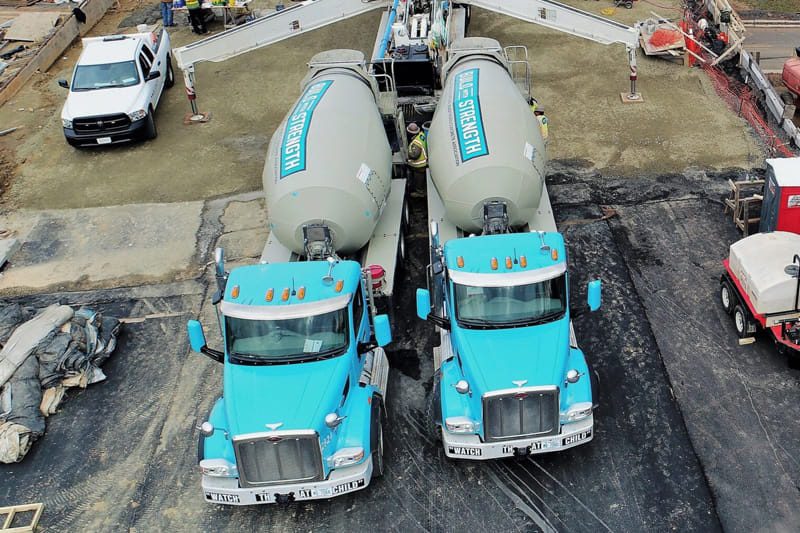
How to Winterize Your Construction Site in the Carolinas: Practical Guidance for Safe and Productive Concrete Work
Winter in the Carolinas is unpredictable. A morning that starts at 45°F can drop below freezing by afternoon, and wind, shade, and ground temperature often shift faster than the forecast suggests. These changes influence how workers move, how equipment performs, and how concrete behaves from placement through early curing.
Deadlines don’t pause for cold weather, so winter preparation needs to be deliberate. The contractors who stay productive understand how cold affects each phase of concrete construction — not just in theory, but in day-to-day field conditions.
Below is a practical, concrete-focused guide to preparing your site for the winter season.
How Cold Weather Changes the Jobsite
Cold weather affects nearly every aspect of concrete construction. Subgrades retain moisture and stiffen overnight, which influences compaction. Formwork and reinforcing steel pull heat out of fresh concrete, slowing early hydration. Moisture freezes in shaded or low-lying areas, creating uneven footing and inconsistent curing environments around the slab.
These changes don’t occur in isolation — they compound. Each shift in temperature, wind, or surface condition alters how the jobsite performs. Recognizing these changes early helps teams adjust placement timing, finishing approaches, and protection plans before the concrete is placed.
Knowing When Weather Should Pause Work
The decision to pour or pause in winter is rarely based on a single number. Temperature, wind speed, precipitation, and ground conditions collectively determine whether a slab can gain the heat it needs to hydrate properly.
OSHA notes that wind can accelerate heat loss even at temperatures above freezing. The National Weather Service highlights freezing rain and sudden temperature drops as conditions that increase slip hazards and equipment instability. For concrete, these same conditions influence placement rate, finishing windows, and early-age strength development.
Contractors who monitor hourly forecasts and incorporate weather margins into their weekly planning avoid the rushed finishing, cold joints, and curing problems that often arise when a pour runs into a fast-changing weather system. When outdoor work becomes unsafe or unproductive, shifting to layout, staging, interior prep, or inspections keeps the project advancing without risking slab performance.
Keeping Equipment Working Through the Cold
Cold temperatures affect equipment long before they force a shutdown. Hydraulic oil thickens, batteries lose output, and diesel engines require longer warm-up periods. Mixers may spin more slowly at start-up, which can alter slump by the time a load reaches the placement area. Hoses stiffen, controls respond slower, and visibility drops as windows fog or frost.
Reliable winter equipment operation supports concrete performance in several ways:
- Warm-up routines ensure machinery is ready before concrete arrives.
- Cold-weather inspections catch stiff hoses, slow hydraulics, and reduced battery output.
- Anti-gel additives keep diesel equipment functioning during sudden cold snaps.
- Consistent site access prevents delays that compress placement and finishing time.
Winter equipment preparation isn’t just mechanical maintenance — it protects the timing and conditions concrete needs to perform.
Preparing Your Crew for Winter Concrete Work
Equip Workers to Maintain Performance
Concrete work requires dexterity, strength, and consistent pace. Cold weather reduces hand mobility, slows coordination, and increases fatigue. Proper PPE isn’t simply about staying warm — it directly affects the quality of placement and finishing.
Workers benefit from:
- Layered insulation that allows movement
- Waterproof outerwear for cold rain and sleet
- Slip-resistant boots for icy or saturated areas
- Gloves that maintain grip and fine-motor control in low temperatures
When workers lose dexterity or mobility, the slab reflects it — edges, joints, and surfaces are harder to finish consistently.
Reinforce Training and Work Practices
Cold exposure builds throughout the day. Crews need clear expectations for taking warm-up breaks, recognizing early signs of cold stress, and managing hydration. Winter often reduces perceived thirst, but dehydration contributes to fatigue and slower decision-making.
Supervisors should watch for slowed movement, changes in focus, or unsteady footing. These early indicators often appear before a worker recognizes them.
Keep Communication Open
Concrete placement in winter depends on communication. Workers should report icy areas, shifting conditions, or PPE that isn’t performing. These details influence how concrete is placed, consolidated, and protected — and catching them early maintains both safety and quality.
Clearing and Maintaining Safe Work Surfaces
Slip hazards increase in winter, but on a concrete site, they also affect finishing quality, curing, and equipment stability. Ice on walkways, platforms, or around the slab can disrupt placement pacing and cause surface defects when workers lose footing or finishing equipment shifts unexpectedly.
Effective winter surface management includes:
- Clearing snow and ice early and throughout the day
- Applying sand, melt agents, or traction aids in high-traffic areas
- Monitoring shaded areas where ice persists
- Pausing ladder, scaffold, or lift work when surfaces cannot be kept stable
A consistent approach to surface management keeps crews safe and supports uniform slab curing and finishing.
Cold Weather Concreting Requires Expertise
Cold-weather concrete work is one area where technical understanding and preparation make the largest difference.
Low temperatures slow hydration, extend set time, and increase the risk of early-age freezing. Many cold-weather issues are invisible during placement; they appear weeks later as scaling, discoloration, or surface defects.
Our approach is built around mix performance and field conditions. Changes in cement composition —behave differently at lower temperatures. Because of that, each plant evaluates how its cement, aggregate, and admixture combinations perform in winter environments.
From that testing, we calibrate:
- Cement content and blend proportions
- Admixture combinations for predictable set time and strength gain
- Water and aggregate temperatures during batching
These adjustments ensure the concrete leaves the plant within the appropriate temperature range and maintains workable properties throughout placement.
Winter placement also involves timing. Travel distance, expected temperature drop, wind patterns, and slab size all influence how a concrete mix behaves at the jobsite. Our technical, dispatch, and operations teams coordinate closely to match mix performance with real placement conditions.
After concrete is placed, protection becomes critical. Blankets, curing methods, and insulation strategies help the slab retain heat long enough for hydration to progress. A strong winter pour requires both a reliable mix and adequate protection through the first critical hours.
A Successful Winter Strategy Comes Down to Coordination
Cold-weather construction works best when contractors and suppliers plan together. Winter schedules shift, access conditions change, and delivery timing becomes more sensitive to temperature swings.
When contractors bring CSC into planning early, we help identify the adjustments needed to support placement timing, finishing conditions, and curing requirements. Clear communication reduces delays and ensures the concrete’s performance aligns with the conditions crews are working in.
If You’re Preparing for Winter Concrete Work, CSC Can Help
Cold weather doesn’t leave much room for error. If you’re planning concrete work this winter and want mixes, timing, and protection strategies that match real Carolina conditions, our team can help.
We work with contractors every season to prepare the right approach for each project so winter weather doesn’t dictate performance.
If you have any questions, reach out to us. Our team can walk you through the best mix adjustments and site practices for the conditions you’re working in.
Sources National Weather Service. (n.d.). Winter Weather Safety. https://www.weather.gov/safety/winter
OSHA. (n.d.). Winter Weather Hazards and Precautions. https://www.osha.gov/winter-weather
OSHA. (n.d.). Cold Stress Guide. https://www.osha.gov/cold-stress
Portland Cement Association. (n.d.). Placing Concrete in Cold Weather. https://www.cement.org
American Concrete Institute (ACI). (2010). ACI 306R-10: Cold Weather Concreting.